Loading...
Serving Concord, CA and surrounding areas. (925) 536-0971
Cracked mortar, spalling brick faces, and stair-step cracks are not cosmetic issues. We identify what is actually failing and repair it correctly so the damage stops spreading.
Brick repair in Concord covers replacing cracked or crumbling bricks, refreshing worn mortar joints, patching spalled surfaces, and stabilizing sections that have shifted - most jobs take one to three days depending on how much damage has spread and whether scaffolding is needed.
Many homeowners are surprised to find the mortar between the bricks - not the bricks themselves - is usually what fails first. Once mortar breaks down, water gets in and the damage accelerates. In Concord, where winter rain runs from November through March and the soil expands and contracts every year, mortar on older homes can fail faster than in more stable climates. We handle both the mortar and the brick when needed, and on jobs where the issue starts at the joint level, we often begin with tuckpointing before any brick replacement is considered.
A large share of Concord homes were built in the 1950s through 1970s. Brick from that era is now 50 to 70 years old, and mortar from the same period has a natural lifespan that many of those walls have passed. Catching the problem while bricks are still intact keeps costs manageable.
Run your finger along the joints between the bricks. If mortar crumbles easily or comes away in small pieces, it is past its useful life. Mortar that is breaking down no longer keeps water out, and in Concord's wet winters that is a problem that gets worse every rainy season.
That chalky white residue you sometimes see on brick walls in spring is called efflorescence. It happens when water moves through the wall and deposits minerals on the surface as it evaporates. Seeing it means water is already getting in somewhere - and the longer it is left, the more damage accumulates behind the surface.
Diagonal cracks that travel up the mortar joints in a stair-step pattern are a classic sign of foundation or soil movement. Given Concord's clay soils and proximity to active fault lines, this pattern is worth taking seriously - it often means the wall has shifted and the joints have opened to absorb that movement.
When the outer face of a brick starts peeling away, it is called spalling. It usually means water has worked into the brick itself, and Concord's repeated wet-dry cycle is slowly breaking the surface apart. Spalled bricks cannot be patched - they need to be replaced before the damage spreads to neighboring bricks.
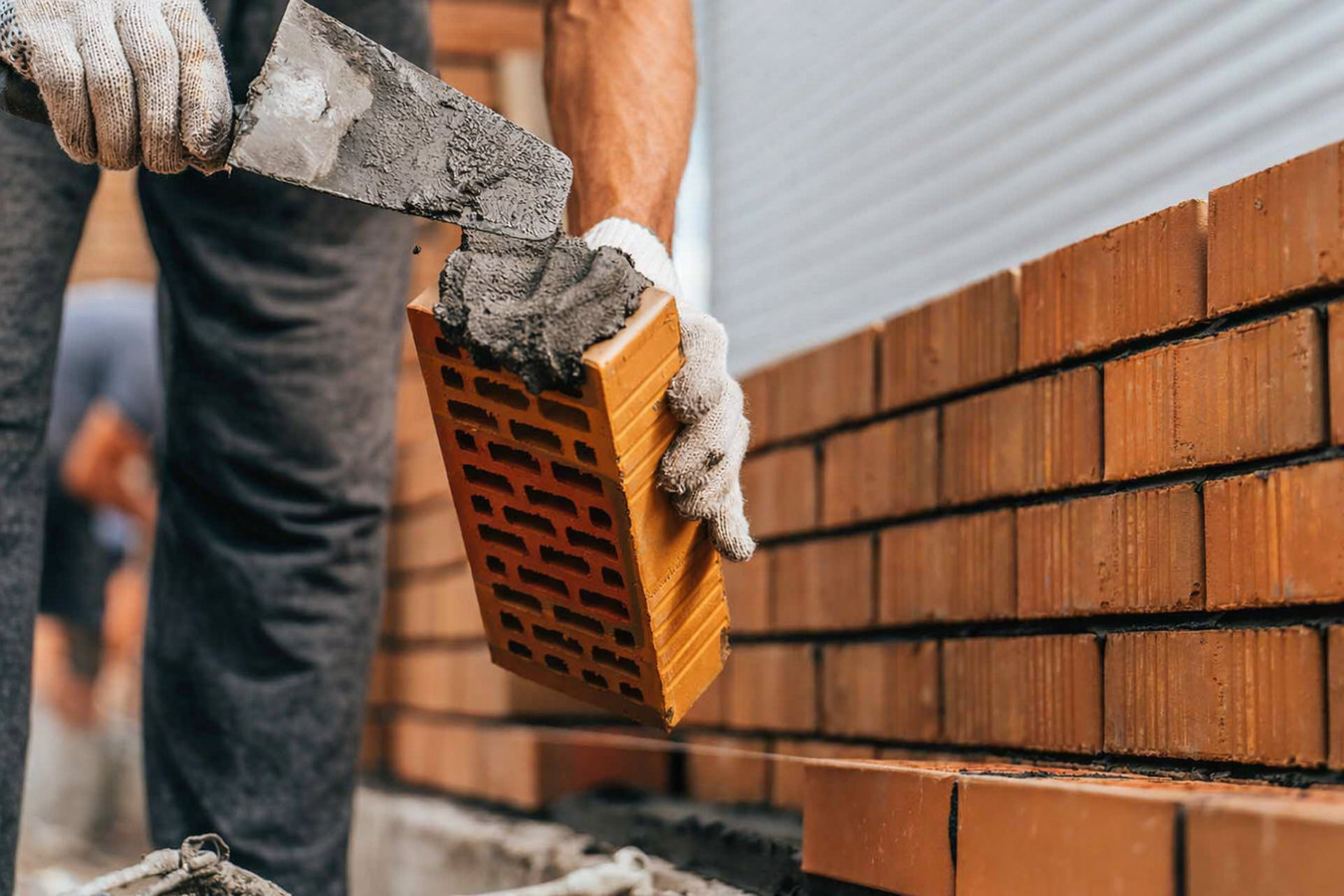
We handle the full range of residential brick repair, from refreshing worn mortar to replacing individual bricks that have cracked or shifted. The most common repair is tuckpointing, where we remove old mortar and pack in fresh, color-matched material. When the bricks themselves are damaged, we source matching replacements as closely as possible, remove the failed units, and reset them with the correct mortar for the existing wall. Every repair is done in a way that accounts for Concord's clay soil movement and seasonal weather - not a generic approach that ignores local conditions.
We also work on brick driveways and hardscape, though most driveway surface issues are handled under our driveway pavers service. For structural repairs - chimney rebuilds, retaining walls, or anything that involves modifying a load-bearing structure - we pull the required permits from the City of Concord's Building Division and coordinate the inspection. That documentation protects you if you ever sell the home. The Brick Industry Association sets the technical standards we follow for mortar selection and brick replacement work.
For homes where the mortar has worn out but the bricks themselves are still intact - the most common and most affordable brick repair.
When specific bricks are cracked through, crumbled, or shifted out of alignment and need to be removed and reset.
For bricks whose face is flaking or pitting due to Concord's wet-dry cycle - spalled bricks are replaced before damage spreads.
Repointing, restoring, or partially rebuilding chimney brickwork, including permit coordination with the City of Concord.
Stabilizing brick walls that have shifted, bowed, or developed stair-step cracks from soil movement or seismic activity.
A close inspection of chimneys and exterior brick walls after notable seismic activity, with repair recommendations and documentation.
Concord gets most of its rain between November and March, then bakes through a long, dry summer. That wet-dry cycle is hard on mortar - it soaks in moisture during the rainy season, then the summer heat dries everything out rapidly. Over years, repeated expansion and contraction loosens mortar and opens gaps that let the next season's rain go deeper. For a city where a large share of the housing stock dates from the 1950s through 1970s, that means a lot of brick is at or past the point where repair is overdue. Concord also sits near an active fault, and seismic stress adds another layer of wear on masonry that has already been working hard for decades. Clay soils throughout Contra Costa County swell when wet and shrink when dry, which puts stress on anything sitting on or attached to the ground - including retaining walls, planters, and chimney bases.
We serve homeowners across the city and the surrounding area. Residents in Pleasant Hill and Martinez face the same clay soil and mid-century housing conditions, and we work in those communities regularly. The masonry restoration principles are the same - match the materials, address the underlying cause, and document the work correctly.
We respond within 1 business day. You will answer a few basic questions - where the damage is, how long it has been there, whether you have noticed water getting inside. No cost to reach out.
We walk the area with you, look at the damage up close, and check for anything not obvious from the ground - like mortar that looks fine but is hollow underneath. You get a written estimate that breaks down what needs to be done and why, before any work begins.
For structural work - chimney repairs, retaining walls, or anything affecting your home's structure - we apply for a permit from the City of Concord's Building Division. This usually takes a few business days. We handle it; you do not need to manage the process.
Old mortar is ground or chiseled out, damaged bricks are replaced with matched units, and new mortar is packed and tooled to fit the existing profile. If a permit was required, a city inspector confirms the work. We walk you through everything when done.
Free on-site estimate. No obligation. We respond within 1 business day.
(925) 536-0971We match brick color, size, and texture as closely as possible and blend the new mortar so it does not stand out. A repair that looks like a patch devalues your home. We take the time to match materials so the finished work looks like it was always there.
Concord's expansive clay soils and proximity to the Concord Fault create repair conditions that general contractors often miss. We assess whether stair-step cracks are from soil movement, seismic activity, or both - and we repair accordingly so the fix holds through the next wet season and beyond.
CDM Concord Masonry works across 12 service areas from Concord to Pleasanton. That means we have done brick repair on mid-century homes throughout Contra Costa County and understand the housing stock, the soil, and the climate conditions your home faces every year.
When your repair requires a permit, we pull it and see it through the city inspection. That paperwork becomes part of your home record - useful when you sell and your buyer's inspector asks questions. You can verify contractor licensing any time on the CSLB website.
Good brick repair is nearly invisible. Those four things - matched materials, local conditions knowledge, regional experience, and clean permit handling - are what make a repair that holds for 20 years instead of opening back up after the next wet season.
Cracked or sunken driveway surfaces replaced with a durable paver system designed to handle Concord's clay soil movement and summer heat.
Learn moreWhen bricks are still sound but the mortar between them has worn out, tuckpointing refreshes the joints and seals the wall against water before damage reaches the bricks.
Learn moreConcord's wet season starts in November - book now and your mortar will be cured and your home protected before the first storm.